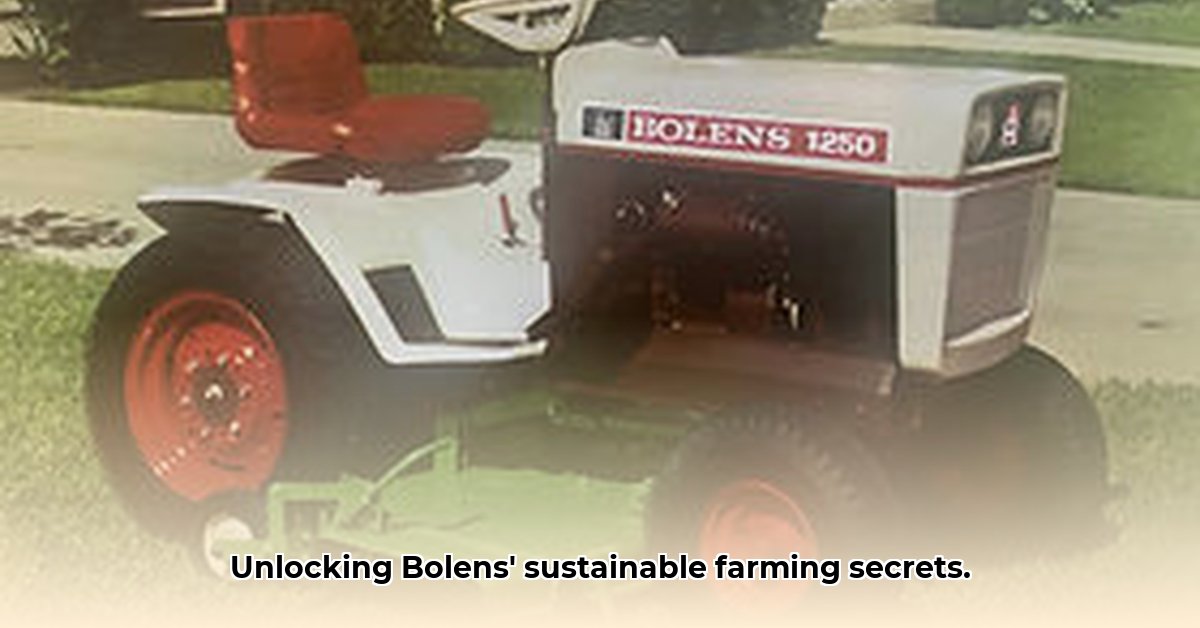
The name "Bolens" might not ring a bell for everyone, but these tractors played a surprisingly significant role in the history of farming, particularly for smaller operations. This article explores their story, examining their impact on agricultural practices and their surprising relevance to modern sustainable farming. We'll delve into what made them special, compare them to other tractors of the time, and consider their enduring legacy in the context of today's environmental concerns. Whether you're a seasoned farmer or simply curious about the history of agricultural technology, this exploration will illuminate the lasting impact of Bolens tractors. For more on small tractors, check out this related resource.
The Little Tractor That Could: Bolens and the Mechanization of Smaller Farms
Before the rise of compact tractors, many small farms relied heavily on manual labor. Harvesting, tilling – it was all physically demanding, limiting both farm size and output. The introduction of smaller, more maneuverable tractors like those from Bolens was revolutionary. Suddenly, smaller farms could afford and effectively utilize machinery, leveling the playing field. This boosted efficiency, increased yields, and broadened opportunities for small-scale operations. This accessibility played a crucial role in fostering the diversity of farm sizes often considered a hallmark of sustainable agriculture. Was this positive impact on sustainable farming a deliberate goal of Bolens, or a serendipitous outcome of their business strategy? That's a question worth exploring. Did you know that early Bolens models were already showing the importance of efficiency?
Smart Design, Sustainable Impact?
Bolens tractors weren't simply scaled-down versions of their larger counterparts. They often incorporated ingenious design features that may well have contributed to their eco-friendliness. While precise data on fuel efficiency and soil compaction from that era is limited – record-keeping wasn't always as rigorous – the inherent nature of compact tractors suggests advantages for sustainable practices. Smaller size generally translated to lower fuel consumption, less wear and tear on the land, and reduced soil compaction – all vital factors for environmentally conscious farming. Imagine the impact if these machines had been more widely adopted earlier – the agricultural landscape might look very different today. How much fuel did a Bolens tractor actually save compared to larger models? Further research is needed to quantify this impact.
Beyond the Tractor: Bolens and the Broader Context
The discontinuation of Bolens tractor production in 1991 marked a significant turning point. Larger agricultural companies consolidated the market, leading to fewer choices and potentially less innovation geared toward the unique needs of smaller farms or specific sustainable farming methods. This raises a crucial question: Did the loss of independent companies like Bolens stifle innovation tailored to environmental concerns? The history of Bolens underscores how powerful market forces can influence agricultural technology development, sometimes hindering the adoption of more sustainable practices.
Lessons from the Past: A Call for Modern Innovation
The history of farm equipment is often overlooked in discussions about sustainable agriculture. Studying companies like Bolens offers invaluable insights. What can today's manufacturers learn from their design innovations? How can we ensure future agricultural equipment prioritizes sustainability, echoing the early promise of compact tractors? Dr. Anya Sharma, Professor of Agricultural Engineering at the University of California, Davis, notes, "Analyzing the fuel efficiency and soil health impacts of Bolens tractors could provide a crucial roadmap for creating truly sustainable farm equipment." Research in this area is vital.
A Head-to-Head: Bolens vs. the Competition
To fully understand Bolens' contribution, comparisons with competitors are necessary. A thorough analysis examining fuel efficiency, maintenance, and lifespan would illuminate their competitive advantage. A comparison with modern equivalents could reveal crucial design improvements needed for truly eco-friendly machinery. This comparative study would provide a more complete understanding of Bolens' place in history. What surprising features did Bolens tractors offer compared to similar models from other manufacturers?
The Missing Pieces: Gaps in Knowledge and Future Research
Despite their potential significance, much information on Bolens tractors and their environmental impact remains elusive. Accessing archival data on fuel consumption rates, maintenance logs, and service life is essential for deeper analysis. Likewise, we need to better understand the environmental effects of manufacturing materials and disposal methods – crucial for a holistic environmental assessment.
Towards a Sustainable Future: Actionable Steps
The legacy of Bolens tractors extends far beyond their production. Their story represents a crucial step in agricultural technology, highlighting the potential of compact machinery for a more sustainable future. Further research is needed to fully understand their impact and how those lessons can inform the creation of a more environmentally friendly farming future.
Key Takeaways:
- Bolens' focus on smaller tractors inherently reduced soil compaction.
- Efficiency translated to lower fuel consumption and reduced environmental impact.
- Their legacy provides valuable lessons for modern manufacturers.
- Further research is crucial to fully quantify their sustainable impact.